Cold Chain Storage in Saudi Arabia: A 2026 Guide for Food Brands
Cold chain storage in Saudi Arabia has moved from a nice-to-have to a business-critical service. As the Kingdom’s food imports climb and Vision 2030 pushes local production, brands need reliable temperature-controlled space that keeps perishables safe from farm gate to shelf. Jeddah, as the country’s main seaport city, sits at the heart of this flow.
In this guide, I share what I have learned helping food companies choose warehousing partners. You will see how chilled and ambient facilities differ, what standards matter in 2026, and how to control cost without gambling on product safety.
Why cold chain storage matters more in 2026
Saudi Arabia imports the majority of its food, and much of it enters through Jeddah Islamic Port. A single break in the cold chain can spoil an entire container of dairy, seafood, or fresh produce. That is lost revenue and, worse, a public health risk.
The Saudi Food and Drug Authority (SFDA) enforces strict handling rules for perishable goods. According to the Food and Agriculture Organization, roughly a third of food produced globally is lost or wasted, and poor cold storage is a leading cause. Tight temperature control directly protects your margin.
Demand is rising for good reason. E-commerce grocery, quick-commerce, and the growth of local dairy and poultry brands all need dependable chilled space near consumers. Providers that offer professional Chilled Storage in Jeddah now support everything from fresh produce to frozen ready meals.
What “cold chain” actually means
The cold chain is the unbroken series of temperature-controlled steps a product travels through: harvest or manufacture, transport, storage, distribution, and retail display. Break any link and the whole chain fails. Storage is where products spend the most time, so it carries the most risk.
Chilled versus ambient storage: choosing the right zone
Not every product needs refrigeration. Choosing the wrong zone wastes money on one side and spoils stock on the other. Match each SKU to the environment it truly needs.
Dry goods such as rice, canned foods, and packaged snacks store safely at room temperature. For these, cost-efficient Ambient Storage is the smart choice. Save your chilled capacity for the products that genuinely depend on it.
| Storage type | Typical temperature | Best for | Relative cost |
|---|---|---|---|
| Frozen | -18 °C or below | Seafood, meat, ice cream | Highest |
| Chilled | 0 °C to 5 °C | Dairy, fresh produce, pharma | High |
| Cool | 8 °C to 15 °C | Chocolate, some cosmetics | Medium |
| Ambient | 15 °C to 25 °C | Canned goods, dry staples | Lowest |
Signs you need chilled space
- Your product label states a “keep refrigerated” range.
- Shelf life drops sharply above room temperature.
- Regulators require documented temperature logs.
- You ship dairy, meat, seafood, or fresh produce.
What to look for in a cold storage provider
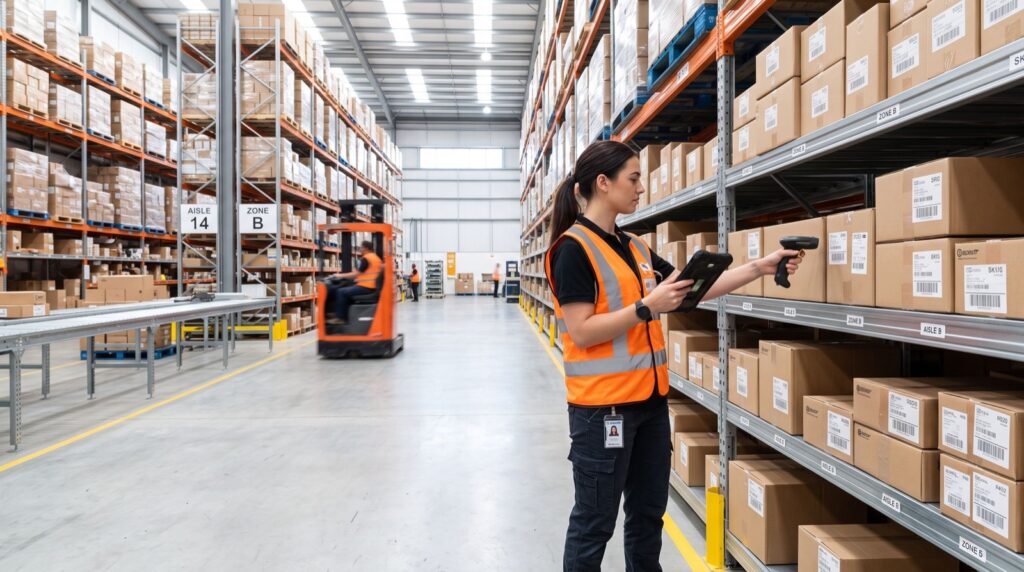
The Jeddah market has grown crowded, and facilities vary widely in quality. I always start by asking how a provider handles the boring-but-vital details: monitoring, backup power, and audits. Those separate serious operators from the rest.
Follow this checklist when you evaluate a partner:
- Continuous monitoring. Look for 24/7 digital temperature logging with alerts, not manual checks.
- Backup power. Generators must engage within seconds of an outage to protect stock.
- SFDA compliance. The facility should meet Saudi food-handling and traceability rules.
- Zoning flexibility. Frozen, chilled, cool, and ambient bays under one roof simplify logistics.
- Location. Proximity to Jeddah port and highways cuts transit time and risk.
- Clean audit history. Ask for recent third-party inspection results.
Working with established, quality service providers gives you documented processes and accountability. That paperwork trail matters when a client or auditor asks questions.
Questions to ask on a site visit
Walk the floor before you sign. Check that chilled rooms hold temperature near open doors, that racking is clean and organized, and that staff can explain the alarm procedure without hesitation. A confident, well-drilled team is a strong signal.
Controlling cost without cutting corners
Cold storage costs more than ambient because refrigeration uses energy around the clock. Still, smart planning trims the bill. The goal is to pay for cold space only where cold space earns its keep.
Practical ways to reduce spend include right-sizing your chilled footprint, consolidating slow-moving stock, and using shared or 3PL facilities during seasonal peaks instead of leasing a full unit year-round. Blended contracts that mix chilled and ambient zones often deliver the best value.
The hidden cost of getting it wrong
One spoiled shipment can erase months of storage savings. When I model total cost for clients, I weigh the price per pallet against the value of the goods at risk. For high-value perishables, paying a premium for a proven facility is almost always the cheaper decision over a year.
How to future-proof your cold chain
Technology is reshaping storage in 2026. IoT sensors, cloud dashboards, and automated racking now give brands live visibility into every pallet. Ask whether your provider offers real-time reporting you can access remotely.
Sustainability also matters. Newer facilities use energy-efficient refrigeration and solar support to cut both emissions and running costs, savings that responsible operators pass along. Aligning with these operators supports your own environmental targets, too.
Frequently Asked Questions
What temperature is required for chilled storage in Jeddah?
Most chilled storage in Jeddah operates between 0 °C and 5 °C, ideal for dairy, fresh produce, and many pharmaceuticals. Frozen products need -18 °C or colder. Always follow the specific range on your product label and any SFDA guidance.
How is ambient storage different from chilled storage?
Ambient storage keeps goods at controlled room temperature, roughly 15 °C to 25 °C, without refrigeration. It suits dry, shelf-stable products such as canned foods and grains, and it costs far less than chilled or frozen space.
Can one warehouse handle both frozen and chilled goods?
Yes. Well-designed facilities offer separate zoned rooms for frozen, chilled, cool, and ambient products under one roof. This lets you store a mixed catalog in a single location and simplifies distribution.
How do I verify a provider keeps the cold chain unbroken?
Ask for 24/7 temperature logs, backup-power specifications, and recent audit reports. Reliable operators share this data openly and can alert you within minutes if a room drifts out of range.
Conclusion
Reliable cold chain storage in Saudi Arabia protects your product, your customers, and your reputation. Match each SKU to the right zone, insist on monitoring and backup power, and treat a proven provider as an investment rather than a cost. Ready to secure temperature-controlled space in Jeddah for 2026? Partner with an experienced storage team today and keep every link in your cold chain strong.